
September 21, 2026
How Art Blurs Fantasy and Reality in Video Games
~6-7 minutes read (based on ~1,400 words)
To make a great game takes many factors, and artwork is a key component. But art is more than atmosphere and a pretty backdrop, game art is vital in creating an immersive space and triggering a player’s emotional responses. Strategic and well-executed artwork woven through the environment will not only tell the story of the game, it can provide atmosphere, tension and fear.
Exceptional art direction will communicate the game’s themes, tone, social commentary, and even question the players morality. Game art should be able to transform seemingly impossible places into worlds that feel believable, immersive, and alive. In other words, game art should blur the lines between fantasy and reality.
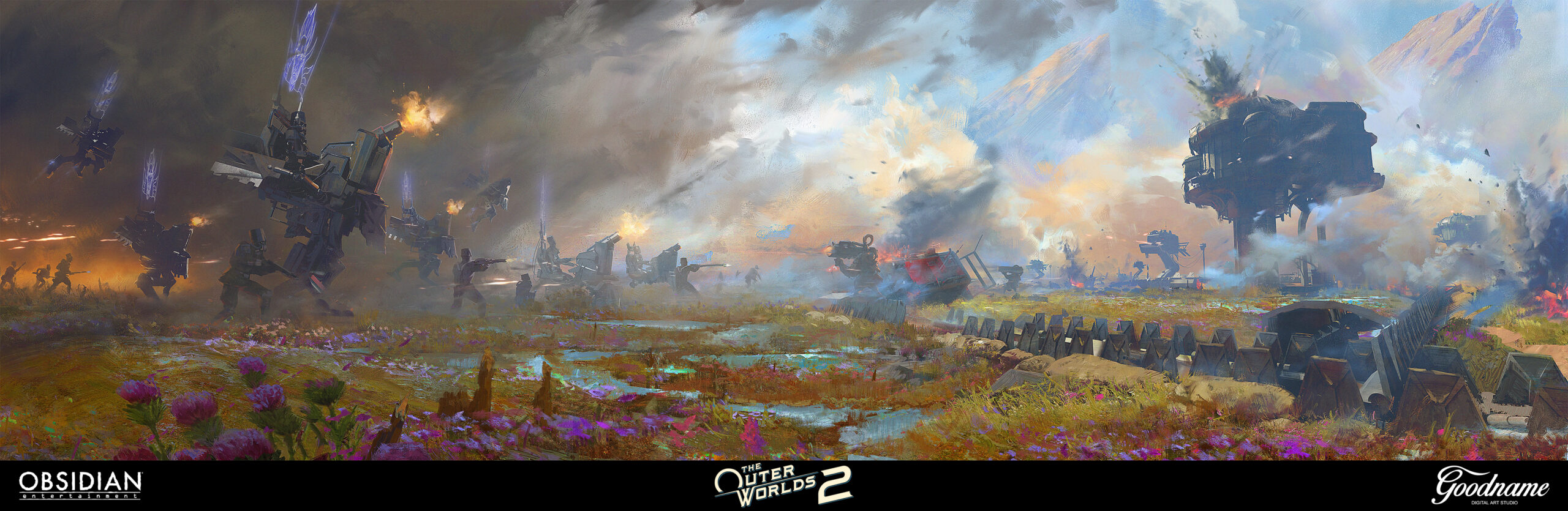
And the best artwork is not necessarily the most realistic. Great art should fully engage the player even when the world itself is not grounded in reality. A nice example of this is in The Outer Worlds 2, where a somewhat bizarre concoction of 1950’s retro is mixed with sci-fi elements, the art direction typically being described as “the Old West in the future”.
Decidedly not “realistic” but it successfully manages to blur the lines of reality anyway with its combination of retro-futuristic aesthetic, dieselpunk technology, Art Nouveau influences, and the use of striking colour.
The use of this colour in familiar surroundings adds a feeling that something is slightly “off” in the world. The off-key feeling is reinforced with the strangeness of 1950’s culture, vintage travel posters, cigarette ads, and old-skool diners, juxtaposed against futuristic elements like spaceships and aliens.
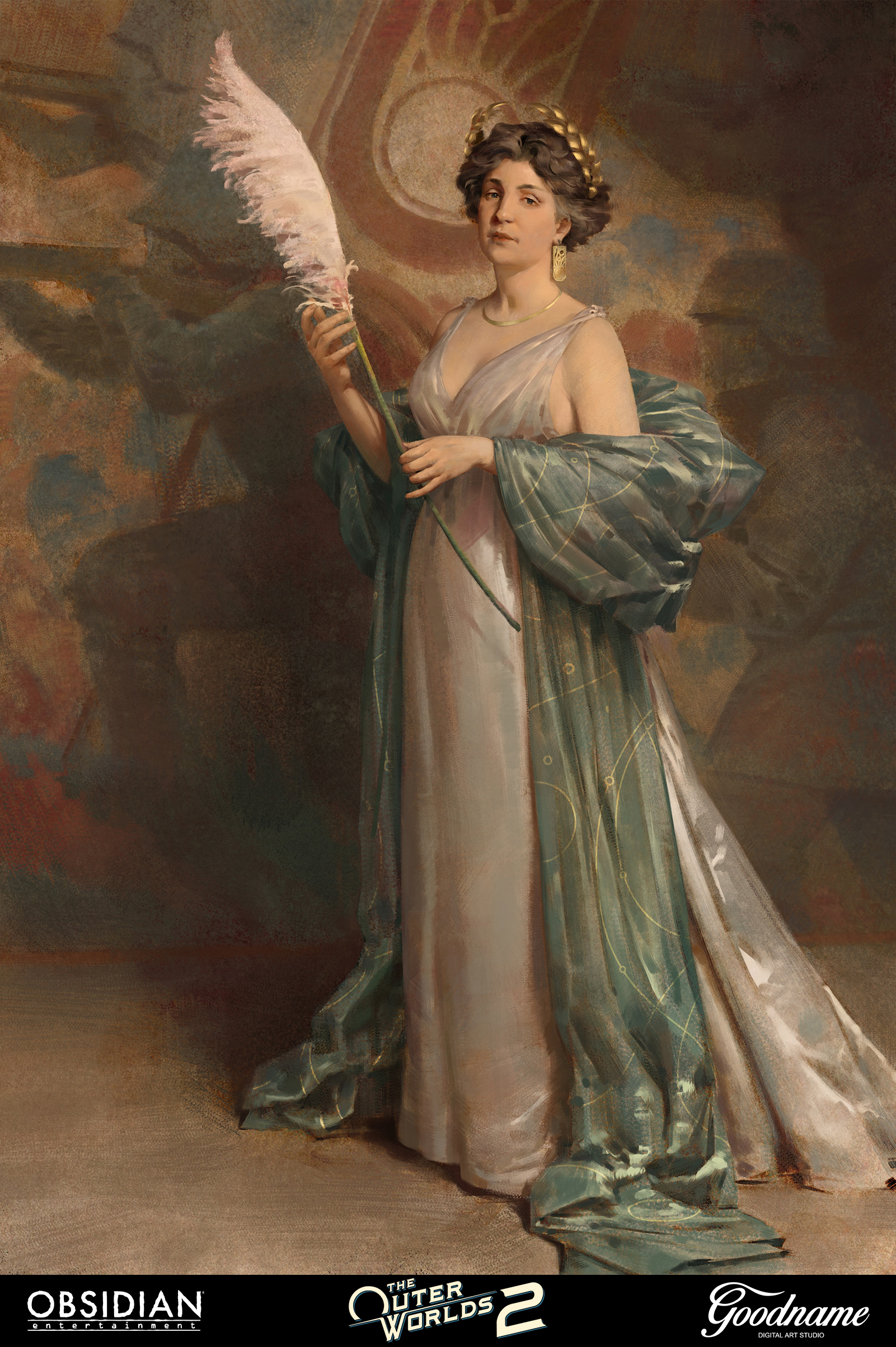
One of the most interesting aspects of the artwork is the use of murals, ads, branding, and other propaganda woven through the environment to reinforce the story and establish a feeling of cohesion throughout the game. Where the artwork is placed and how it is discovered by the player can add even more to depth to the experience. A particularly nice use of this is in the propaganda images in loading screens.
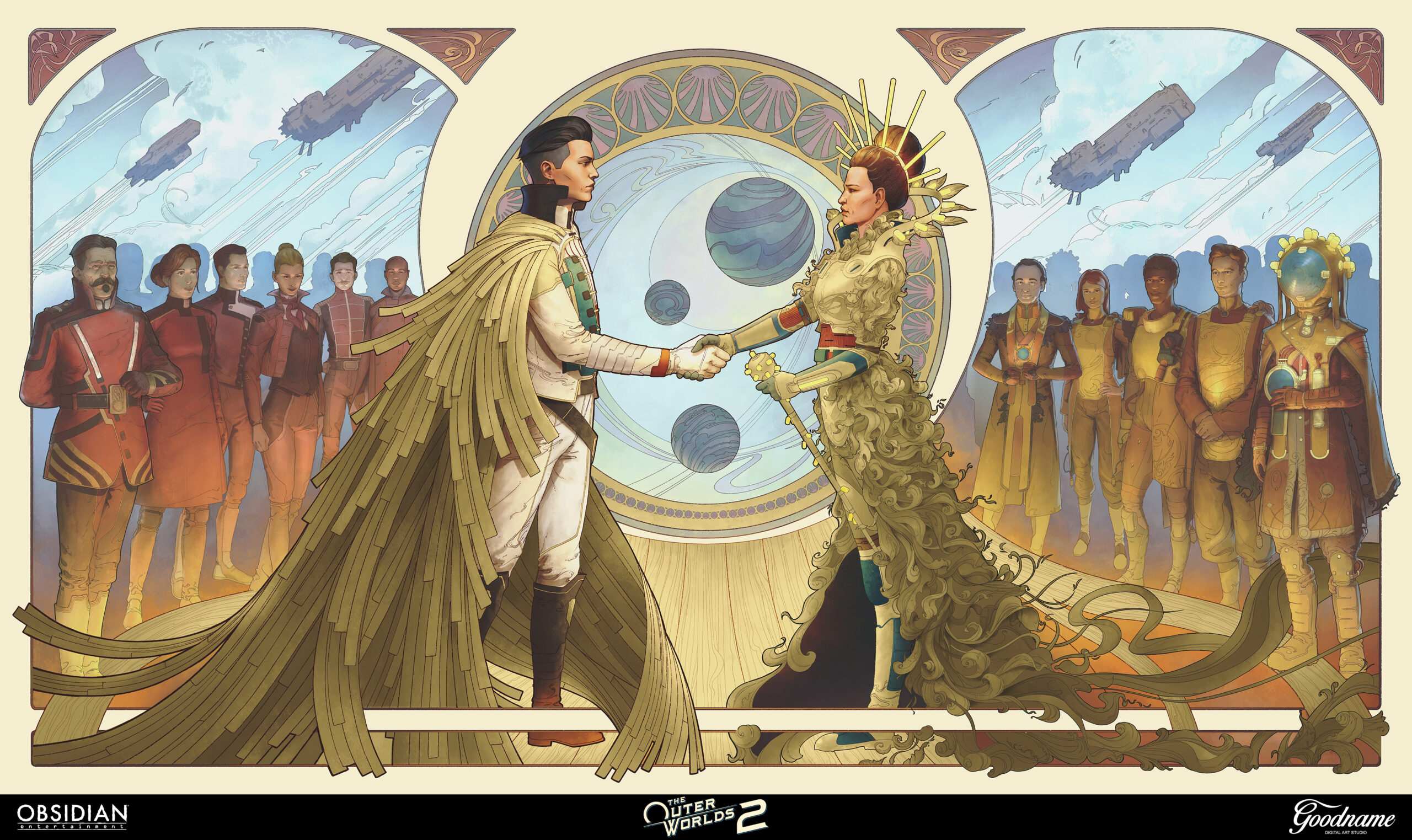
In The Outer Worlds 2, artwork blurs the line between fantasy and reality by presenting a future that feels bizarre, yet familiar, and the mix of past and future aesthetic adds another layer of interesting social commentary.
Games like Black Myth: Wukong also play around with timelines, but Wukong gets its art inspiration entirely from the past: a heady mix or history and folklore. Wukong was originally inspired by one of the four great Classical Novels of Chinese literature: Journey to the West. Written in the 16th century, the novel’s rich mythology, spiritual imagery, and fantastical creatures provide the games visual framework.
The novel follows the mythical Monkey King, Sun Wukong, and his adventures alongside a monk and his quest for Buddhist scripture. But Black Myth: Wukong takes a darker approach, exploring a more cynical universe combining traditional Chinese architecture, ancient temples, and disintegrating ruins. The dedication to world building is felt throughout the game, through its detailed blend of mythology, traditional pagodas and ruins, and the stunning landscapes of lush greenery and mist covered mountains.
Wukong’s artwork also plays with scale, the imposing craggy mountains and huge statues for example, give the player a sense of smallness and a feeling of awe and majesty.
The use of religious deities’ nods to civilisations that came before. And by giving things a scruffy feel, crumbing temples, weather-beaten statues, and overgrown ruins, the art successfully portrays a sense of a time and a history forgotten.
But the artwork is also practical. A mountain or a Buddhist statue serves as a handy landmark and visual anchor for the player to traverse the world.
The effect is a breathtaking immersion into ancient history and mysticism, and a world that feels both magical and atmospheric.
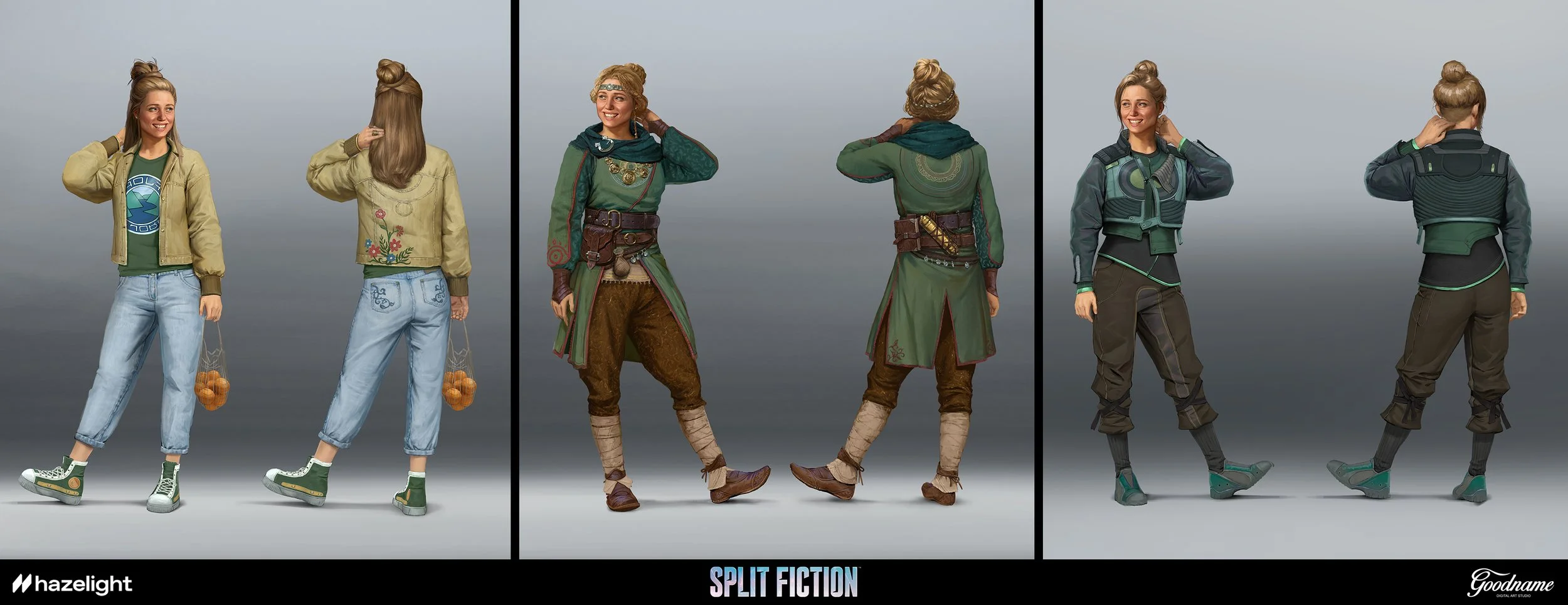
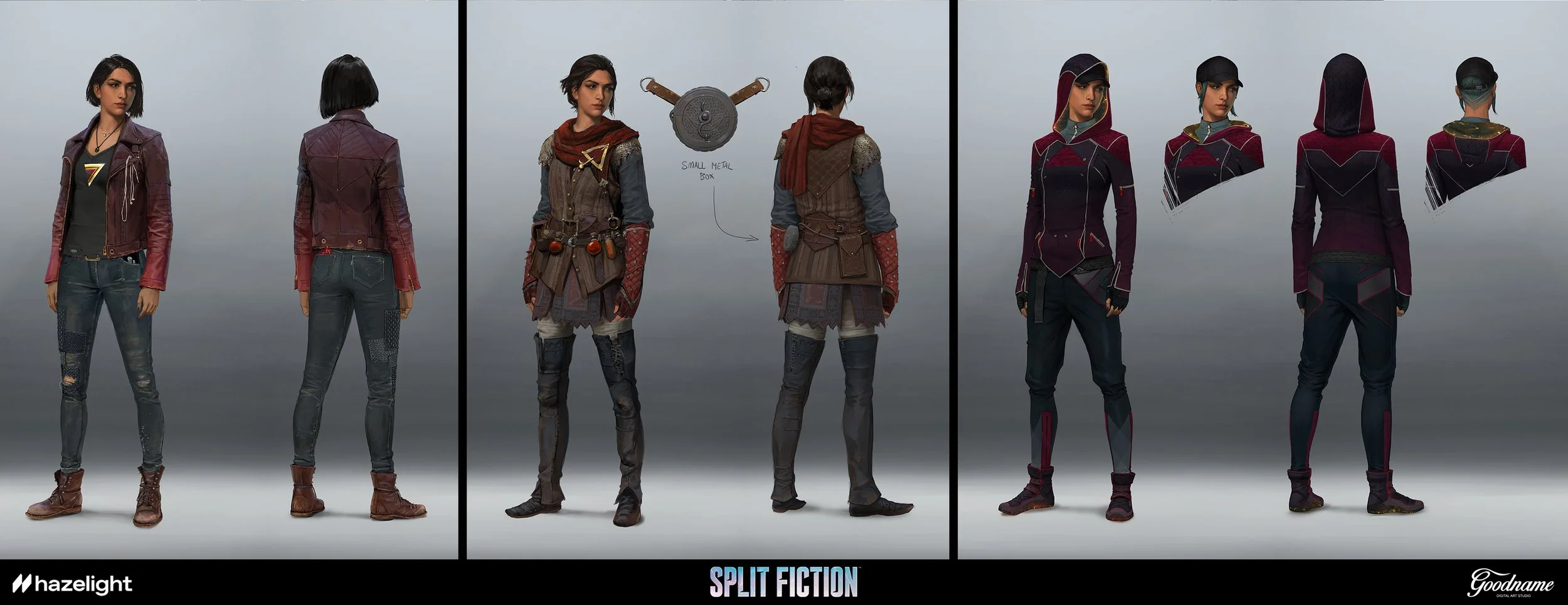
Though very different on the surface, another game that utilises the artwork to create awe and majesty is Split Fiction.
When two aspiring writers, Mio (sci fi) and Zoe (fantasy), are hooked up to a machine that brings their imagination to life, the player gets to explore their respective worlds. Which means playing inside a sci-fi world one minute, then fantasy the next.
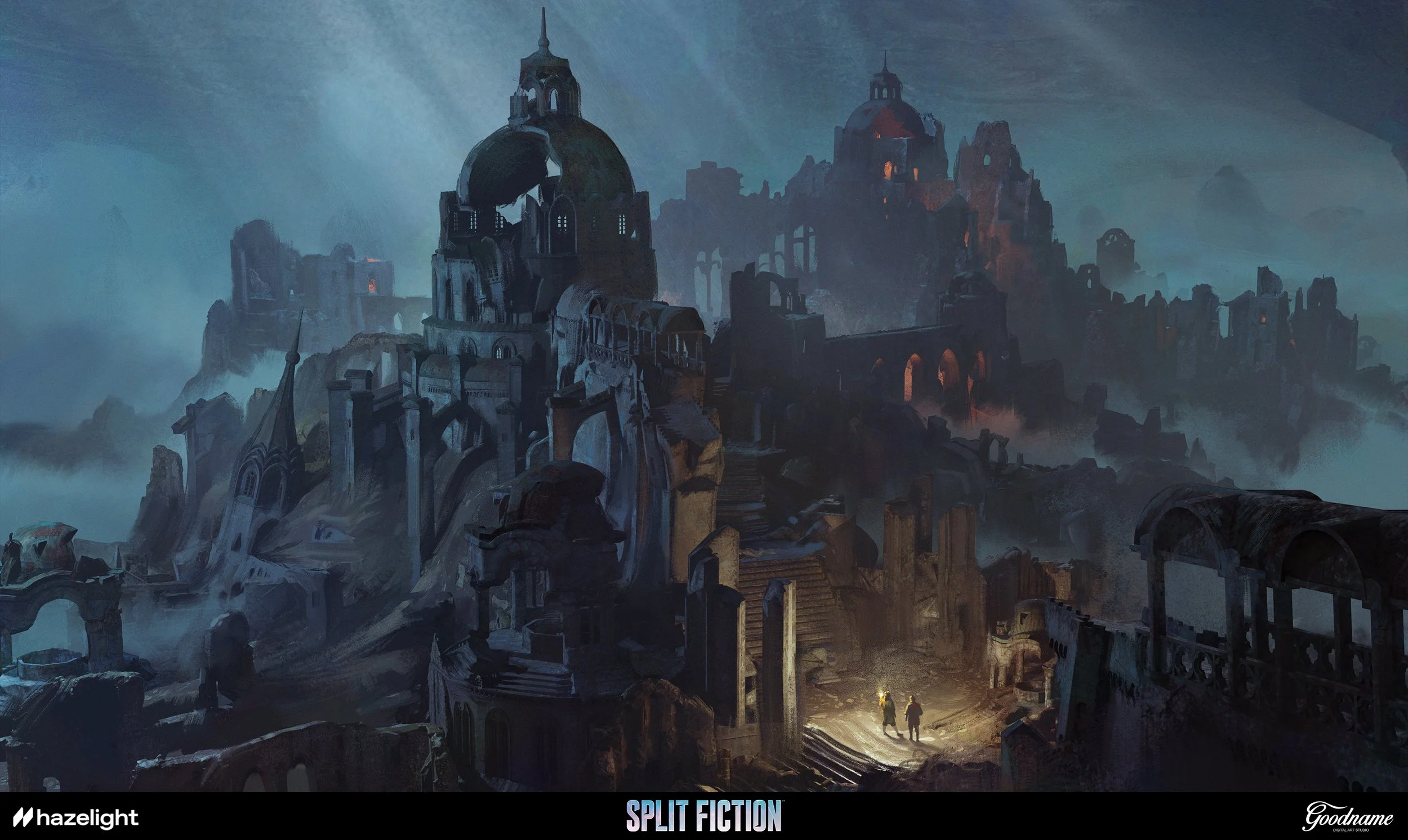
Traversing a futuristic city, riding a dragon, and even becoming a hotdog, should not gel together, but the strong art direction doesn’t hold back.
Each scene commits to the style so completely that the player can’t help but get sucked in. The experience mirrors that of Wukong as it throws out impossible, slightly overwhelming, experiences that dwarf the player.
And the visual changes aren’t just decorative. Take the use of colour palettes for example – Split Fiction uses the game’s two protagonists to represent different mindsets, and in turn, two different worlds. It helps the player easily figure out how to solve puzzles, and when their protagonist morphs into a weird fantastical creature, the player can identify them easily.
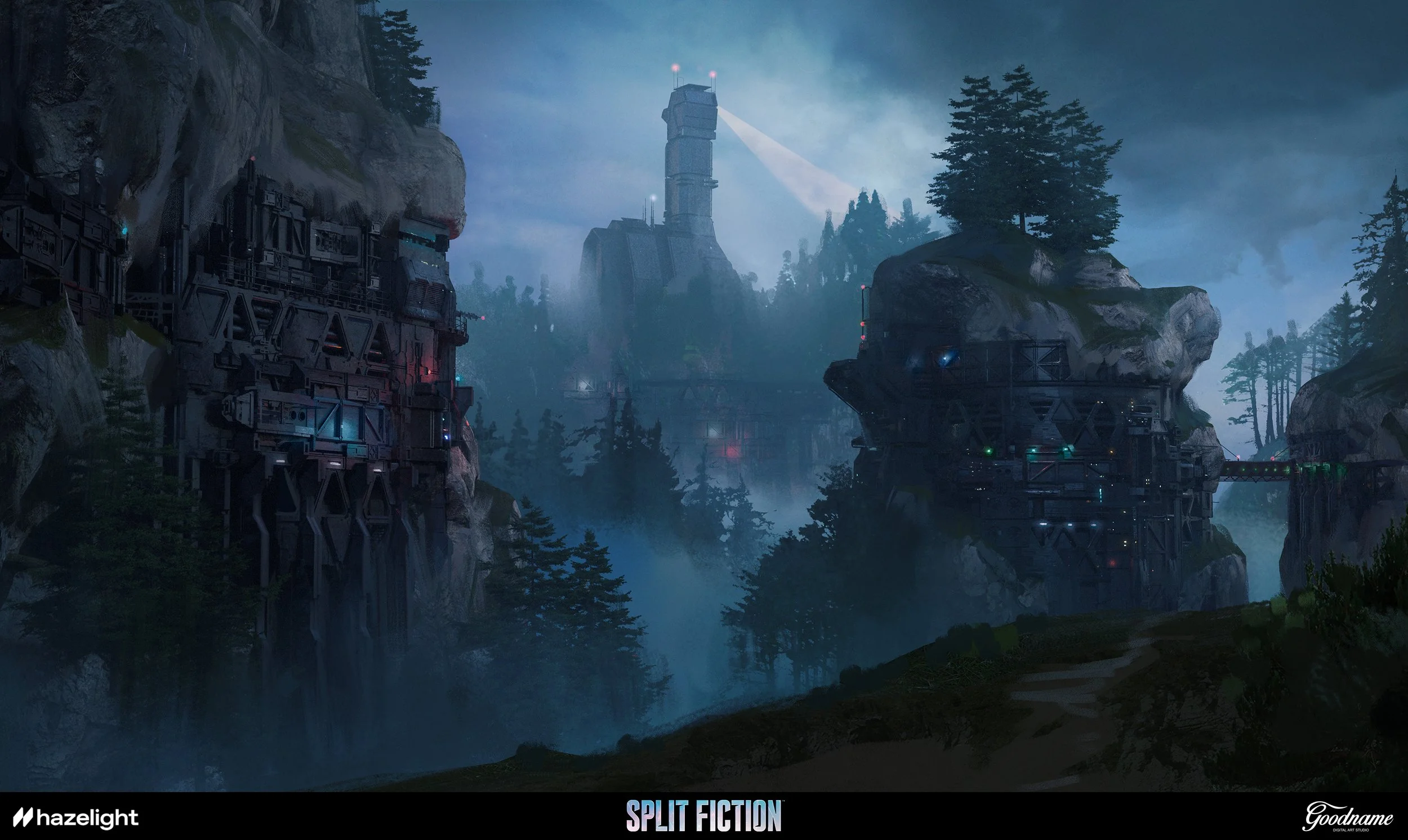
The two colour palettes project a clear feeling of each of the worlds too. Mio’s world is dark and futuristic, metallic, lit by neon, high contrast, and techy. Zoe’s is a literal fairytale: warm, vibrant colours, and cosy.
Most games spend hours showing players how their world works, and once you’ve experienced the architecture, creatures, and landscapes, the player begins to know what to expect. Split Fiction’s genre-splicing between sci-fi and fantasy means the player is left in a never-ending state of surprise and delight. No easy feat for any game.
As the examples of game art show here, it’s clear that great art is not just a “nice to have”, but an integral part of the game world and important storytelling device.
Adeptly used art in the environment creates atmosphere, mood, and tension by playing with texture, colour and lighting. While playing with depth and scale builds an immersive world utilising spatial storytelling.
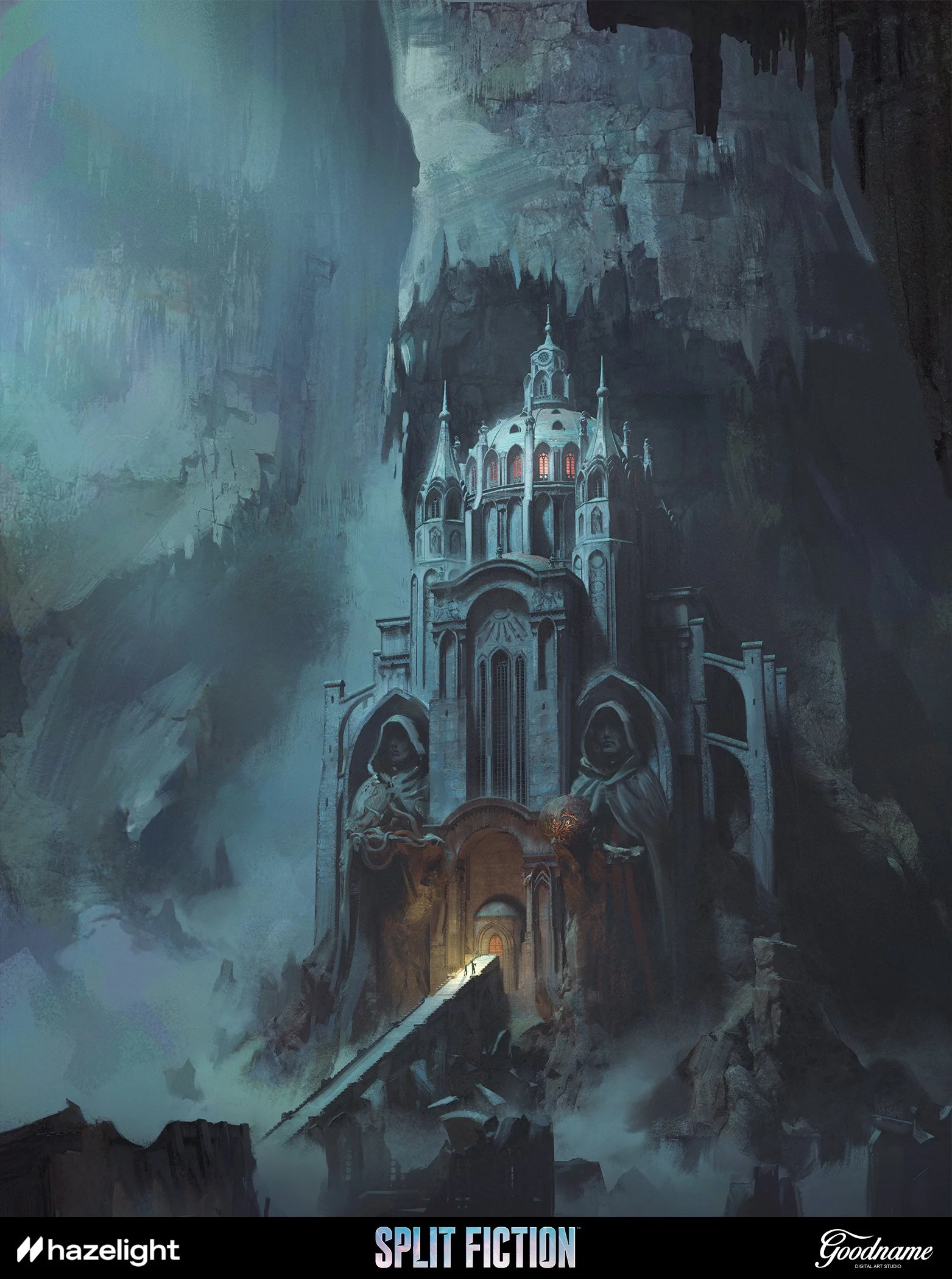
Art can also be used strategically to guide the player, with subtly placed clues to build the world and pull the player deeper into the game, directing them emotionally, and influencing how they behave and interact in the environment.
By using art to build multiple layers of lore throughout the game, you get a deep, rich, narrative framework that allows the player to absorb the lore and quickly understand the world at a glance. In fact, when employing this technique successfully, it’s even possible for the story to be told through the art alone – and without a single word of text or dialogue, if you so wished.
So, whether it’s the mist covered mountains of ancient China in Black Myth: Wukong, the bizarre and retro-futuristic The Outer Worlds 2, or the genre-flipping world of Split Fiction, when used intentionally, art can tell a rich multi-layered story and create a fully immersive experience that blurs the lines of fantasy and reality.
An experience that leaves players feeling emotionally moved, spellbound, and with memories that last for years to come.
That is power of great art.